




|
| Glass Glazing |
 |
||||||||||||||||||||||||||||||||||||||||||||
|
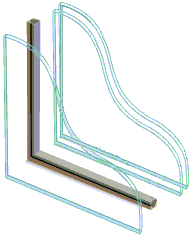
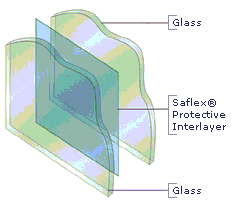
What is Laminated Glass? Laminated glass consists of a tough protective interlayer made of polyvinyl butyral (PVB) bonded together between two panes of glass under heat and pressure. Once sealed together, the glass "sandwich" behaves as a single unit and looks like normal glass. Annealed, heat strengthened or tempered glass can be used to produce laminated glass. Similar to the glass in car windshields, laminated glass may crack upon impact, but the glass fragments tend to adhere to the protective interlayer rather than falling free and potentially causing injury. Laminated glass is the only glass to provide durability, high-performance and multi-functional benefits while at the same time preserving the aesthetic appearance of the glass. Laminated glass furnishes solutions to many architectural design problems and offers increased protection from the effects of disasters such as hurricane, earthquake and bomb blast. Benefits of laminated glass include: Safety Safety is just the start In every glazing design, minimizing the risk of injury from accidental glass impact, breakage and/or fallout is everything! Ordinary glass windows are fragile and when broken can cause serious injuries - sometimes even fatal. When laminated glass made with Saflex protective interlayer is used in a glazing design, the risk of injury as a result of broken glass is considerably reduced. On impact, the glass itself may crack, but the fragments tend to adhere to the Saflex plastic interlayer. By keeping the glass in its place, the Saflex protective interlayer provides added protection from dangerous flying or falling glass fragments. Laminated architectural glass is commonly used for its safety applications in residential and commercial applications and meets the tests for the following industry standards: Vertical Safety Glazing Application the Consumer Product Safety Commission (CPSC) and the architectural glazing safety sections of the major model building codes (Basic National Building Code; Standard Building Code; Uniform Building Code) all set uniform requirements for the performance of glazing materials used in applications which present a potential hazard to the public. These applications include entrance doors, storm doors, patio-type sliding doors, shower and bath enclosures, sidelights and fixed glazed panels. Performance requirements are determined by the application and the size of the glazing area. Laminated glass with Saflex meets all of these established building codes. Sloped and Overhead Glazing Applications the use of glass in sloped and overhead glazing presents a design and safety challenge. If the glass should break for any reason, the glazing system specified needs to be able to provide protection from glass fallout. With adhesion of the glass to the plastic interlayer and its ability to remain integral if broken, laminated glass with Saflex has passed the requirements set of all the major model building codes in the United States and the Glazing Industry Code Committee for sloped and overhead glazing. Security Burglars, bombs and bullets no match for Saflex laminated glass The astonishing strength of laminated glass is perhaps most dramatically illustrated in safety and security applications. Glazing systems using Saflex laminated glass can improve the design of facilities to reduce physical damage and human injury resulting from accidental, criminal and terrorist attacks. Security glazing can generally be used anywhere ordinary glass is required, providing an effective substitute for other construction materials while furnishing the added benefits of light and visibility. Current United States building codes do not require glass to meet performance stipulations which relate specifically to security concerns. Glass is not required by code to deter forced entry, to deflect projectiles such as bullets, or to remain intact after exposure to the shock wave and fragment impacts resulting from an explosion. Security glazing can be used to counter threats from the following general areas: Burglaries Burglaries are frequently directed towards targets of easy opportunity and low perceived risk by the burglar. A simple deterrent, security glazing, may be enough to send the intruder to the next easier target. The ability of a laminated glazing product to protect against forced entry is measured by Underwriter's Laboratories Inc. Test UL972 (12). Glazing materials which meet these test requirements are generally strong enough to deter a smash and grab burglary, and is often specified for residences, shop fronts and display cases in stores, museums and libraries. Ballistic Protection Security glazing with laminated glass of appropriate thickness and configuration can reduce death and injury from bullets in high-risk locations, while still providing the aesthetic and visions benefits of glass. Bullet-resistant glass is made by bonding alternate layers of glass with Saflex to form a single, multiple-ply laminate. Bullet-resistant glazing is tested under Underwriter's Laboratories Inc. Test UL752 (13). Laminated glass between 1 and 2 inches thick can generally resist bullets from weapons ranging from a .38 super automatic to a high power .30-06 rifle. Bomb Blast Resistance Unfortunately, bomb attacks and threats are on the rise all over the world. The fear generated by a bomb's instant holocaust of property damage, injury, flame and noise can be more powerful than conventional armed attacks. Bomb blasts propagate blast energy in all directions, making buildings nearby the intended target candidates for destruction as well. Experts report that approximately 75 percent of all damage and injury from bomb blasts can be attributed to flying and falling glass following the explosion. Laminated glass can substantially reduce injury resulting from explosions, and even reduce the cost to repair a bombed facility by reducing the extent of damage and opportunity for looting. Since the tragic Oklahoma City Bombing in April, 1995, the United States Government is exploring the role of glazing as a deterrent to explosions, but no federal standards currently exist. Electronic Eavesdropping With high technology playing an increasing role in corporate and government security operations, electronic eavesdropping to obtain classified or proprietary information can result in staggering losses. Interference with computer networks from electromagnetic noise generators (such as heavy machinery operating outside the facility) can also be the source of loss. Electronic security glazing uses Saflex metalized fabric mesh and glass. When the glass is manufactured, the fabric mesh is extended an inch or more from the edge of the glass on all four sides and then connected to the metal frame. The frame members are connected to each other, and then to an effective ground. The result is a facility that is isolated from external electro-magnetic signals and occupants are capable of communicating without interception from the outside. The specification frequently used to describe performance requirements for computer and communications security is NSA 65-8, National Security Specifications for RF Shielded Enclosures for Communications: General Specifications(19). Sound Control Sound solutions for noise reduction Skylights can be the weak link in the transmission of unwanted sound into a building. Just as a window lets in light, it also can transmit irritating noise from airplanes, traffic, and heavy machinery to name a few. Laminated glass made with Saflex plastic interlayer is highly effective in reducing unwanted sound transmission and can also be used in standard skylights design. Whether in single or double glazing, the presence of one or two laminated components in a window or door can improve the acoustic performance of the glazing surface by dampening resonance effects. In comparison, solid or monolithic glazing systems do not effectively control sound because of their inadequate ability to screen high frequency noises. Double glazed systems may offer an improvement over the monolithic systems, but the span of air space required to provide acceptable acoustical control introduces architectural design restraints as well as higher costs. Only laminated glass made provides significantly better sound insulation performance in a single unit system. With laminated glass made with Saflex, the protective interlayer dampens the vibration of the glass thus reducing transmitted sound. For example, a ¼" laminate (two lights of 1/8" glass bonded with 0.0300" Saflex) has sound transmission loss performance nearly equal to that of monolithic glass having almost twice its surface weight (slightly less the ½" monolithic glass). Additionally, the sound isolation provided by two pieces of glass ¼" thick separated by ½" air space can also be achieved by laminating two pieces of 1/8" glass with only 0.030" UV Protection that Shines Through With time, sunlight can cause considerable damage to buildings furnishings, carpets, artwork, photographs, plants and other valuables. These items need special protection from the damaging effects of the sun's ultraviolet (UV) rays. Laminated glass made with Saflex can be effective in screening out the harmful UV rays, controlling glare and decreasing solar energy transmittance. Glazing solar control is accomplished in laminated glass by the interlayer's ability to reflect and/or absorb and re-radiate much of the solar UV radiation. Laminated glass made with Saflex screens out more than 99% of damaging UV light. The Saflex protective interlayer prevents the degrading of dyes, pigments and polymers which causes color fading and deterioration of natural and synthetic materials of the interiors in a building. While protecting buildings from harmful and damaging solar UV radiation, laminated glass made with Saflex has no adverse affect on the health of indoor plants. In fact, laminated glass is commonly used in greenhouses and atriums to help protect flower color and reproductive development from the damaging effects of UV radiation. Photoreceptors in plants are still able to absorb sunlight the Saflex interlayer allows to be transmitted. Laminated glass has been used to protect some of the world's most valuable treasures from harmful UV damage, including the Mona Lisa and the Declaration of Independence. Color Achieving Color with Laminated Glass Saflex color can be added to enhance any project while taking advantage of the protective benefits of laminated glass. The pigmented interlayer offers true, long-lasting earth tones and sky tones to help you create a lasting impression. Saflex has the ability to match colors of standard glass types while providing all the functional benefits of Saflex clear laminates. The architect can achieve varying light transmissions without having to vary glass thickness or sacrifice structural performance. The Vanceva™ Design Studio, at www.saflex.com/en/TechnicalLibrary.aspx?pt=ARCH, is an interactive online tool designed to allow architects to experience the creative possibilities of Solutia's color and design products. Saflex is available in many colors for small or large projects and for interior or exterior applications.
|